

Go Back
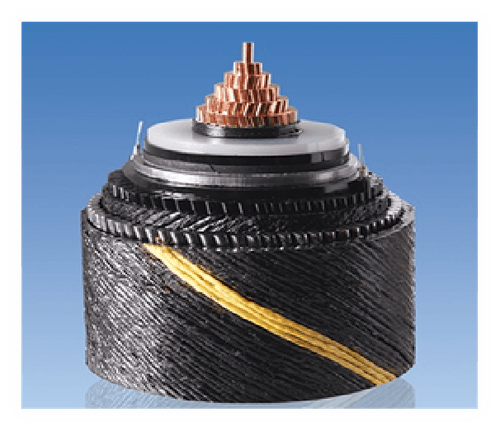
Structural Composition of a Single-Core 500kV Cable
$2,500,000.00
A single-core submarine cable is built in concentric layers to balance intense electrical pressure with harsh undersea mechanics:
1. Conductor: Centered large-cross-section copper or aluminum (often ranging from 800 mm² up to 2500 mm²) to deliver high currents efficiently.
2. Insulation Shielding System: Triple-extruded layers consisting of a conductor screen, the primary XLPE/MI insulation, and an outer insulation screen to smooth out electrical fields.
3. Metallic Sheath & Waterproofing: Lead alloy sheath or corrugated copper combined with water-blocking tapes to halt water ingress under heavy deep-sea pressure.
4. Armoring: Single or double layers of heavy-duty galvanized steel wire (or specialized aluminum alloys for AC circuits to minimize induced magnetic losses).
5. Outer Sheath: Tough polypropylene yarn or high-density polyethylene (HDPE) layered with bitumen for maximum abrasion resistance against the seabed.
If you are evaluating these cables for a specific project, let me know if you need info on HVAC vs. HVDC current ratings, typical installation depths, or cable protection methods.
1. Conductor: Centered large-cross-section copper or aluminum (often ranging from 800 mm² up to 2500 mm²) to deliver high currents efficiently.
2. Insulation Shielding System: Triple-extruded layers consisting of a conductor screen, the primary XLPE/MI insulation, and an outer insulation screen to smooth out electrical fields.
3. Metallic Sheath & Waterproofing: Lead alloy sheath or corrugated copper combined with water-blocking tapes to halt water ingress under heavy deep-sea pressure.
4. Armoring: Single or double layers of heavy-duty galvanized steel wire (or specialized aluminum alloys for AC circuits to minimize induced magnetic losses).
5. Outer Sheath: Tough polypropylene yarn or high-density polyethylene (HDPE) layered with bitumen for maximum abrasion resistance against the seabed.
If you are evaluating these cables for a specific project, let me know if you need info on HVAC vs. HVDC current ratings, typical installation depths, or cable protection methods.
Quantity
Add to cart
